
Safe and secure home charging for your residents.
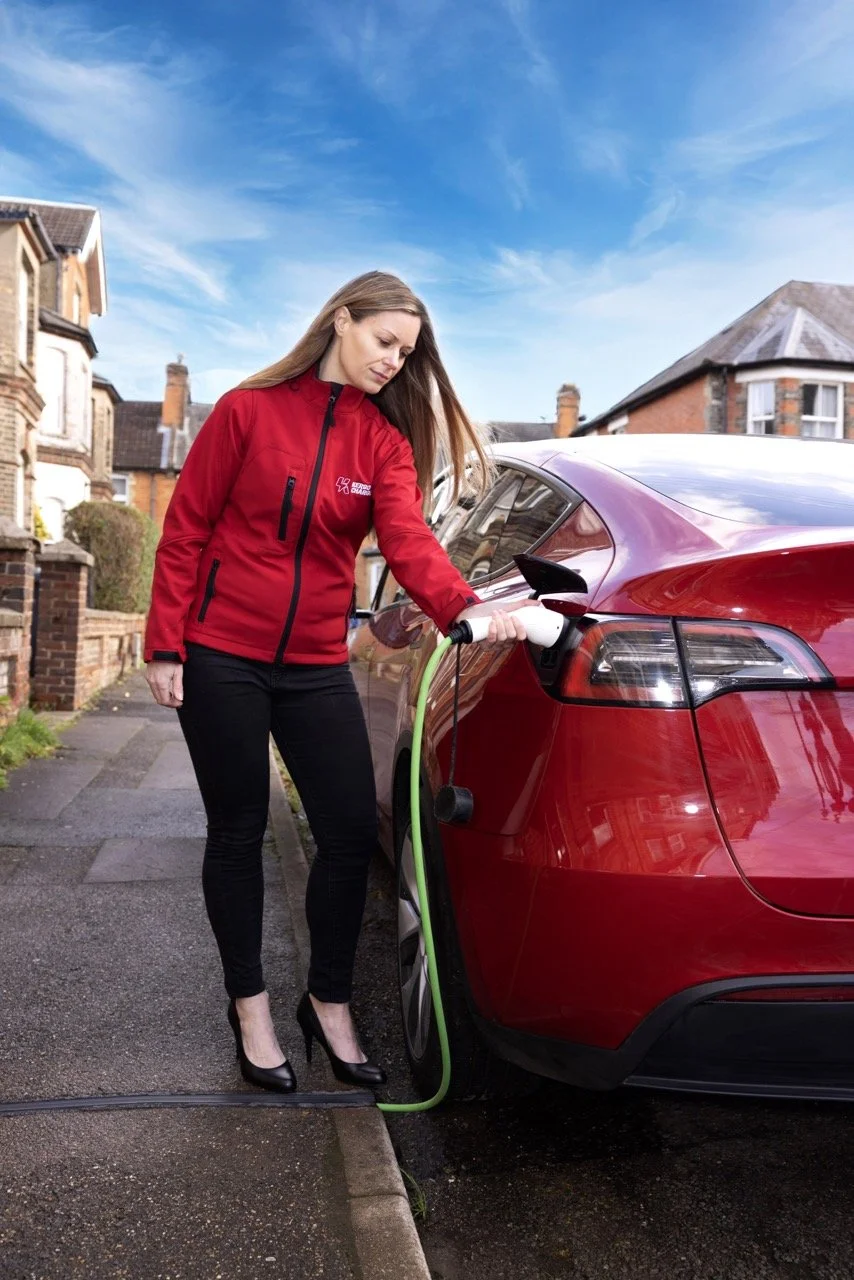
Kerbo Charge is the award winning through-pavement channel that residents use to charge safely at home.
It contours with the shape of the pavement, unlike metal competitors.
We provide a licensing pack to cover maintenance and liability.
Proudly working with these councils across the UK



















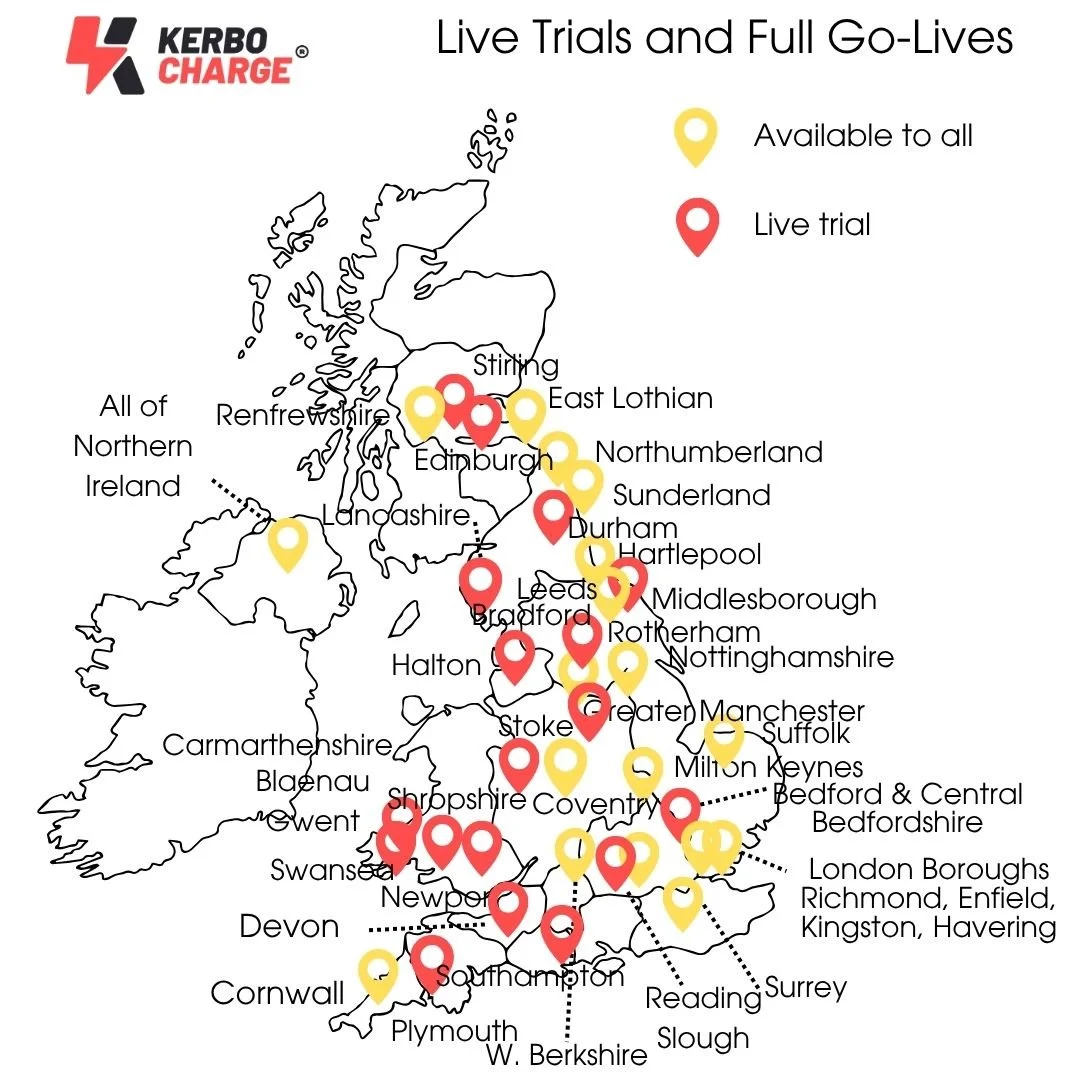
Now live with 45 local authorities across the UK
Get the info pack to learn how other local authorities are approaching maintenance and liability arrangements post-install.
Specifically designed for local authorities

Slim and shallow cable channel
-
The Kerbo Charge channel can flex during fitting to remain flush with the surface of uneven or cambered pavements.
-
The channel is 32mm deep which means highways engineers only need to cut into the top tarmac layer.
No additional foundation or footings are required - the unit is sealed in place with HAPAS approved mortar.

Patented self closing lid design
-
The Kerbo Charge lid snaps down shut behind the charging cable as it is inserted and removed.
There are no magnets, springs or other serviceable parts. -
The main body of the channel is made from polyvinyl chloride (PVC) - a high-strength thermoplastic, and the same material used in many modern pavement utility covers.
-
Typically only 2-4 kg of CO2 to produce 1 kg, and 100% recyclable via our closed loop recycling system.
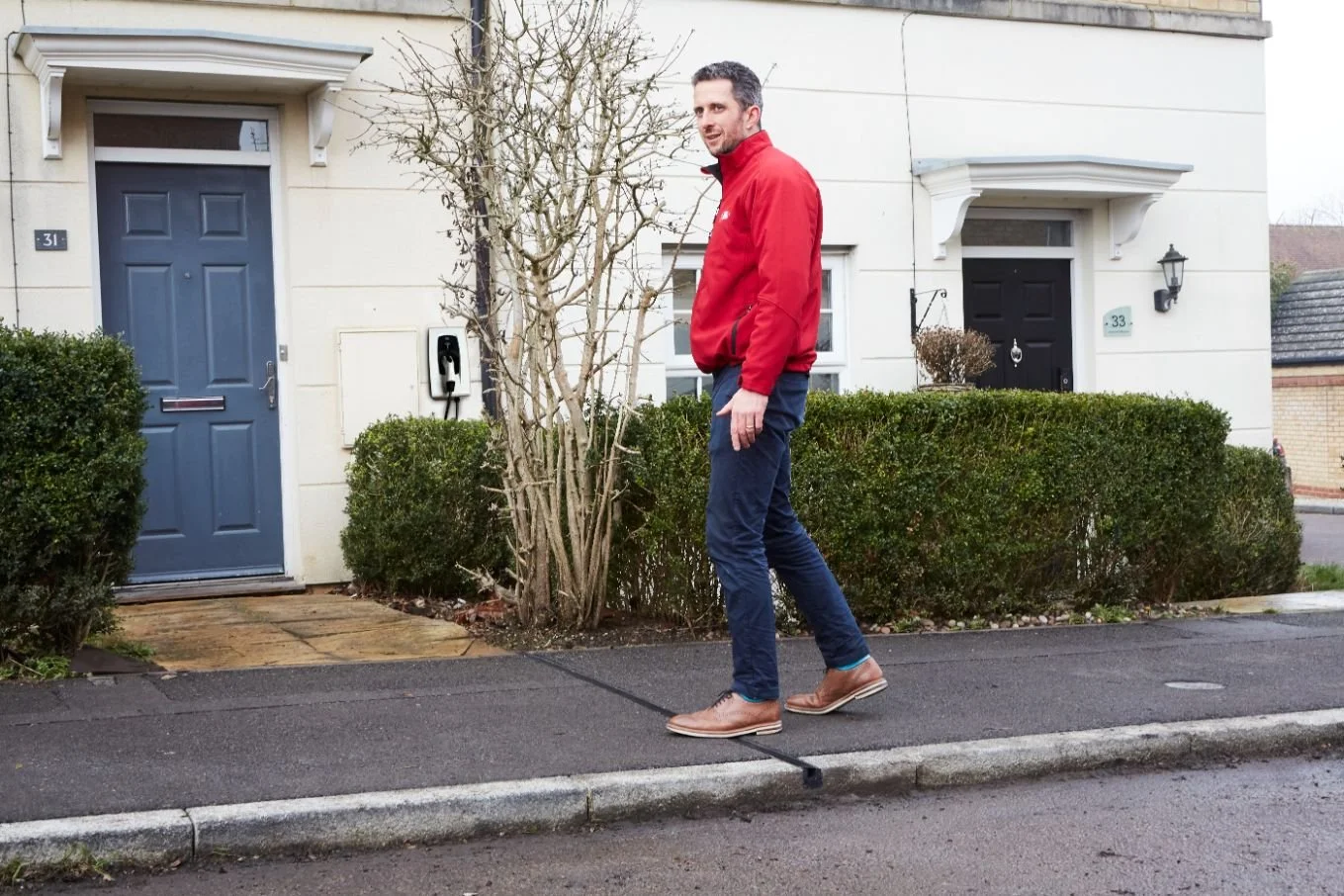
Safe for all foot and vehicle traffic
-
BSI tested to B125 - our product will withstand up to 3,600 kN/m2 pressure, over triple the highest truck tyre pressure.
They also confirmed it meets the requirements for water tightness and durability set for public drainage channels.
-
Wet PTV test value of 52, exceeding minimum requirement of 36.
“This transforms the electric vehicle charging experience, ensuring safety and convenience.
No more trip hazards, just a seamless blend of sustainability and practicality right at your doorstep.”
Denise Gaines, Executive Member for Highways

Kerbo Charge - a hassle free and zero cost pavement gully solution for local authorities
We’ve spent two years developing the ‘perfect’ gully solution. Co-designed with local authority (LA) partners, the design requirements are:
Highly reliable integrated self-closing lid - lid cannot be left open.
Zero cost for LA. The installation is 100% privately paid.
Tested by BSI to BS EN 1433 standard - exceeds C250 (25 tonnes) test.
Maintenance free - a single manufactured unit with no consumable parts.
NEW - Your new ‘all in one’ XPS order management software
Resident applications and payments.
Automatic emails to residents, highways team and the install team.
Electronic signature of resident user agreement.
Electrical safety record keeping and customer service.
All documents and messaging are completely customisable for your local authority
“We've been working with Kerbo Charge to roll-out these channels, which are a really simple solution that stops wires trailing across the pavement and keeps things safe and convenient”
Ben Bradley MP, Leader of Nottinghamshire County Council


10 year product warranty

Designed and manufactured in the UK
-
Manufactured in England in a factory certified to ISO 9001:2008.
-
We operate a closed loop recycling system - we provide the install teams with pre-paid returns bags to send us the offcuts to be 100% recycled.

BSI tested to EN 1433
Slip tested to BS-EN-16165
-
Successfully tested by BSI in February 2023 to BS EN 1433:2002 (Drainage channels for vehicular and pedestrian areas).
Separately slip tested to BS-EN-16165 - wet PTV value of 52 (minimum requirement is 36).
Test certificates available on request.
“We are delighted to have been selected to pilot this pioneering technology which will make owning an electric vehicle accessible to more of our residents.”
Cllr John Shuttleworth, Cabinet member for Highways, Durham County Council


What’s the product made from?
The main body of the channel is made from the same material used in modern pavement utility covers - calcium zinc stabilised polyvinyl chloride (uPVC) - a high-strength thermoplastic.
The advantages of rigid PVC are:
Significantly less CO2 is emitted during production compared to newly manufactured aluminium or steel (2 - 4 kg of CO2 to produce 1kg of PVC vs. 10 - 20 kg for aluminium).
It’s UV stable, has a 100 year life expectancy and is 100% recyclable. We operate a closed loop recycling system - we provide pre-paid returns bags to send us the offcuts to be 100% recycled.
It’s not a target for scrap metal resellers.
Why choose the Kerbo Charge cross-pavement channel?
The Kerbo Charge cable channel is built to withstand all vehicle and foot traffic - as this video explains.
“This is a really innovative and exciting trial which could encourage people to make the switch to electric.”
Milton Keynes City Council Cabinet Member for Climate Action and Sustainability, Cllr Jennifer Wilson-Marklew

For your Highways Team - all the installation practicalities
-
The works are usually carried out by the local authority’s own highways contractor - therefore a Section 50 license is not required.
A survey is carried out before the works start to ensure the installation site is not close to a dropped curb, tree roots or a road turning.
Further survey work is usually not required because the channel is only 30mm deep and so will sit above any buried utilities.
-
We recommend the Milton Keynes City Council model which splits responsibility like this:
Cable trips – resident. They accept liability for any accidents relating to the charging cable and most car insurance policies provide this cover.
Accidents solely related to the channel without a cable involved – the local authority. Most councils update their insurance to include this. To bear in mind the channel sits flat and flush with the surrounding pavement and has a higher slip resistance than the surrounding asphalt.
-
The Kerbo Charge channel is fixed with mortar and MMA gap sealant into a 70mm wide x 40mm deep slot prepared in the pavement.
It is suitable for fitting into most common roadway and pavement materials including tarmac, concrete, paving slabs and block pavers.
Full installation instructions available on request.
-
We recommend adopting the Milton Keynes City Council model.
The council takes maintenance responsibility and charges an upfront licensing fee which covers any costs for the first three years, and then charge a small annual fee.
There are no wearable parts (e.g. no brushes, springs, locks) so there will be limited maintenance requirements for the lifetime of the product (25 years).
-
Kerbo Charge provides a 10 year product warranty. If the lid ever gets damaged (e.g. vandalism) it can be unscrewed, slid out, and replaced, without any ground works.
-
No maintenance is needed apart from occasional cleaning out of the channel by the resident.
-
The main body of the channel is made from calcium zinc stabilised PVC which has a > 25 years life expectancy, and the hinge mechanism is rated to open and close at least 25 million times.
-
Most councils ask for a small annual maintenance fee and this is also the opportunity to confirm if the resident is still living there.
If the resident moves out and the new resident does not want to take on the license and use the channel then the channel can be temporarily blocked off by Kerbo Charge.
-
No - we have not experienced any issues with passers by nefariously removing the charging cable and have not seen any requirement for a lock.
A lock adds complexity and a failure point to the product - the mechanism could become silted up and cease to operate, and the resident could also lose the key.
-
![Trustpilot logo with a green star and five green squares each containing a black star, and black text reading 'Trustpilot']()
"It's very easy to use, looks smart and solved a tricky problem of charging our car in the street in Newbury."
Stephen, Newbury
-
![Trustpilot logo with five green star ratings below it.]()
"The Kerbo Charge team and Volker Highways did a great job installing the cable channel in the pavement, even repairing a dip in the pavement whilst doing so."
Jamie, Reading
-
![Trustpilot logo with a large green star and five smaller green squares each containing a black star, accompanying the black text 'Trustpilot'.]()
"Simple, neat charging solution from a great team"
Grace, Milton Keynes
-
![Trustpilot logo with a green star and five green squares, each containing a black star]()
"Absolutely game changing"
David, Milton Keynes
-
![Trustpilot logo with a large green star and five smaller green stars.]()
"Kerbocharge has been the perfect answer for my EV charging cable needs."
KFH, Hitchin
-
![Trustpilot logo with a large star and five smaller stars beneath it, all in green.]()
"I'm delighted with it and was supported every step of the way"
Sharon, Milton Keynes
-
![Trustpilot logo with five green stars and a large green star to the left.]()
"I can now charge at home at any time of the day"
Mark Crawford, Wolverton
-
![Trustpilot logo with five green stars arranged horizontally, with one larger star and the word 'Trustpilot' written beside it.]()
"The self closing ‘Utube’ is brilliant"
Bryan, Milton Keynes
-
![Trustpilot logo with a large green star and five smaller green stars below, each inside a green square.]()
"EV Charging Made Easy"
Darren, Milton Keynes
-
![Trustpilot logo with a large green star and the word 'Trustpilot' next to five smaller green squares, each containing a black star with a chat bubble tail.]()
"Kerbo Charge has meant that I can charge whenever works for me, and I dont need to worry about having the cable out for extended periods of time."
Alex, Wandsworth, London
-
![Trustpilot logo with a large green star and five smaller green stars below, alongside the word 'Trustpilot' in black and gray text.]()
"Great product, does exactly what it needs to do, guides and protects my EV charging cable across the pavement and protects the public from tripping over."
John Richards, Dunstable
-
![Trustpilot logo with five-star rating symbols.]()
"Saved hundreds of pounds vs charging at work or public chargers in the few months it's been installed."
Jamie, Reading
-
![Trustpilot logo with a green star, black text, and five green review boxes with black stars.]()
Being able to charge our car from home has reduced our charging costs by about 75% and we no longer have to sit and wait in a cafe to charge the car. Total Win Win!!!
Joanne, Bolton
-
![Within a few hours the channel was installed, cleanly and professionally.]()
Within a few hours the channel was installed, cleanly and professionally.
David, Bolton


Your residents are taking risks charging at home
The average cost of 3 - 22 kW public chargers is now 55p/KWH, meaning a single charge using a public charger can be around £25 more than at home (source: Zap Map).
Many residents are therefore taking risks and finding ways to charge at home. The pictures below show different ‘methods’ adopted by residents in different local authorities in the UK.

Floor trail
The most dangerous - without even a cable cover.
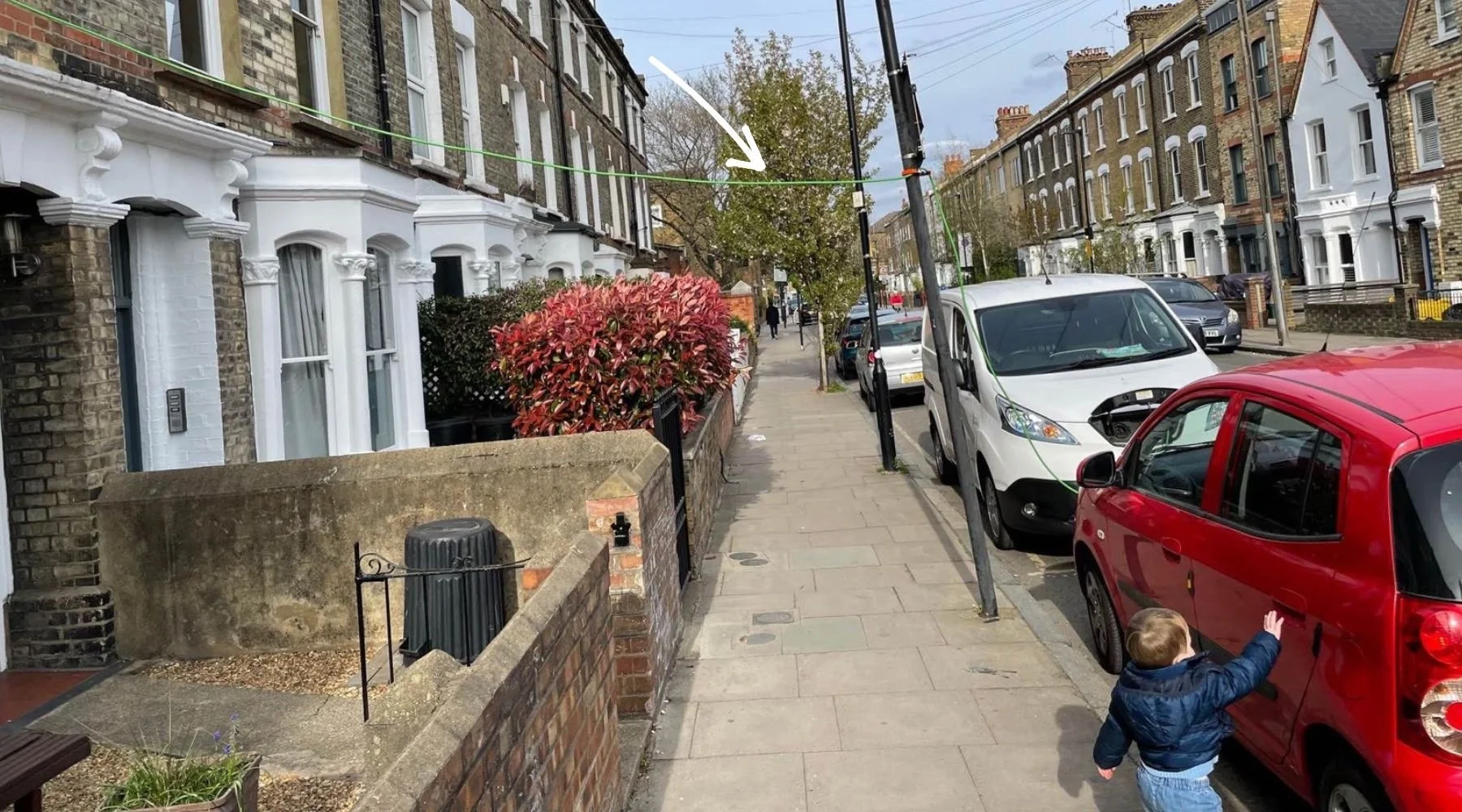
Lamppost dangle
Cable trailed out of top window, wrapped around lampost and dangled down to the car.
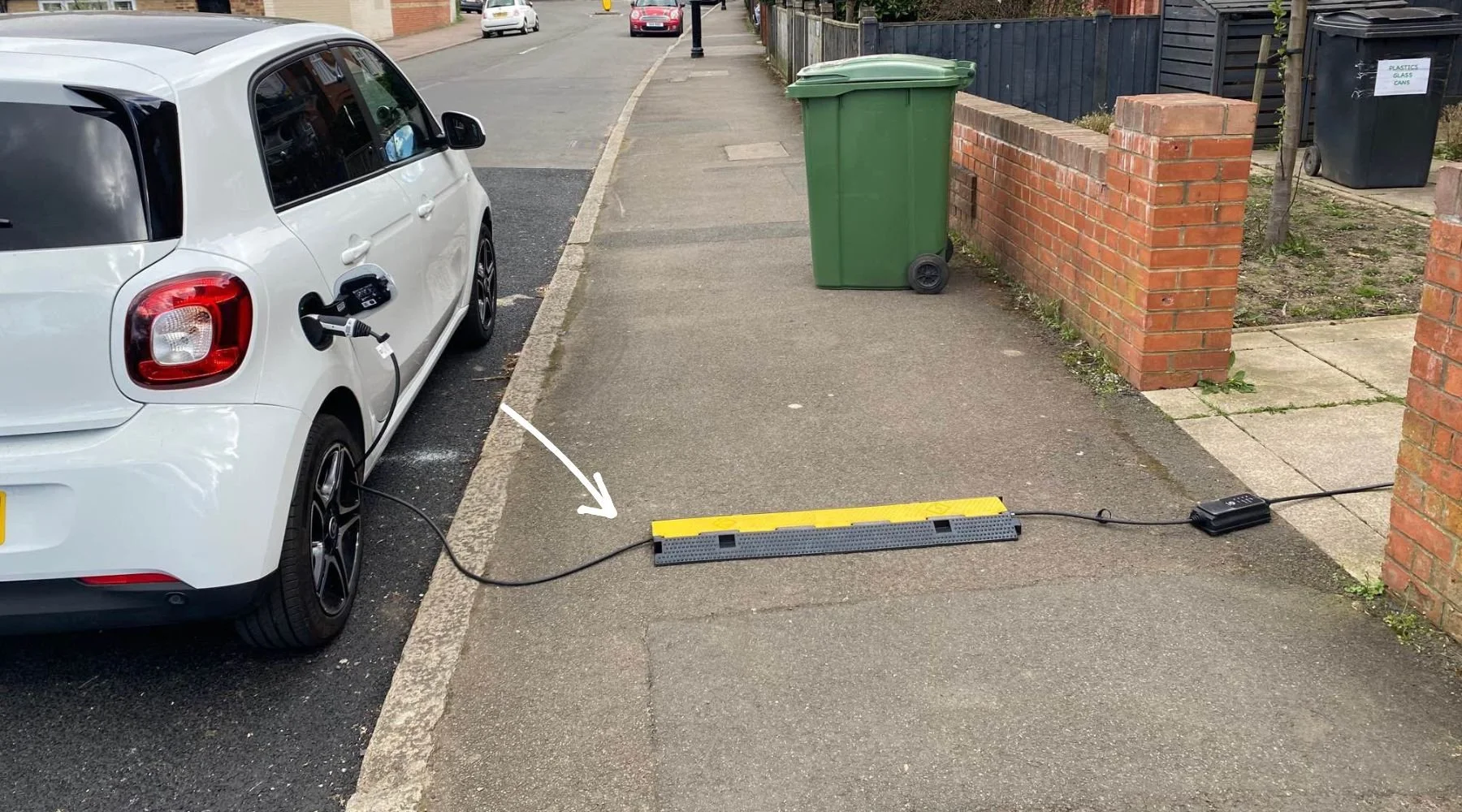
Partial cable cover
Cable covers reduce but do not eliminate the risk of tripping, but usually don’t cover the whole cable, and provide an obstacle to wheelchair users.

Have you declared a climate emergency?
It’s likely that encouraging adoption of electric vehicles (EVs) will be a core part of your strategy, given 24% of UK CO2 emissions are from vehicle emissions.
What’s your strategy to encourage EV adoption for people with no off-street parking?
The conventional wisdom is that to drive faster adoption, the cost of EVs must come down and public charger availability must improve. We think there’s an important part missing.
Are public chargers a big part of your strategy?
With the average cost of the lowest cost chargers in the UK currently 55p/kWh (source: Zap Map), it costs more per mile to charge your car from public charge points than to fill with petrol!
So even if local authorities are able to offer a charger within five minutes of most residents, consumers can see that EVs cost more to buy and are not cheaper to run - this creates a big deterrent.
It’s time to innovate
Many consumers with no off-street parking will continue to be deterred from buying an electric car if the running cost is higher than a diesel or petrol car.
Therefore simply rolling out more public charge points is not going to encourage fast EV adoption in your local authority.
-
A driver that can only charge their car from public charge points typically pays 18p/mile, versus the driver of a petrol/diesel car that pays 15p/mile.
Meanwhile a driver that can charge at home typically pays only 7p/mile.
(Source: ZapMap) -
Charging a 77kWH car using a ‘Slow’ neighbourhood charger typically costs £27.72 more for a single charge, compared to using an off-peak home tariff.
Cost to charge a 77 kWH car from 20 – 100% using a 57p/KWH BP Pulse public charging point vs. cost to charge the same car using a 12p kW/H overnight tariff (Octopus energy). Prices correct July 2023.