
Can You Run a Charging Cable Across the Pavement?
If you have an electric car, or are considering one, but don't have a driveway, you might wonder whether you can run a charging cable across the pavement. The short answer is yes but only with local authority approval and with the right electrical safety measures in place. Here's what you need to know about charging an electric car across the pavement.
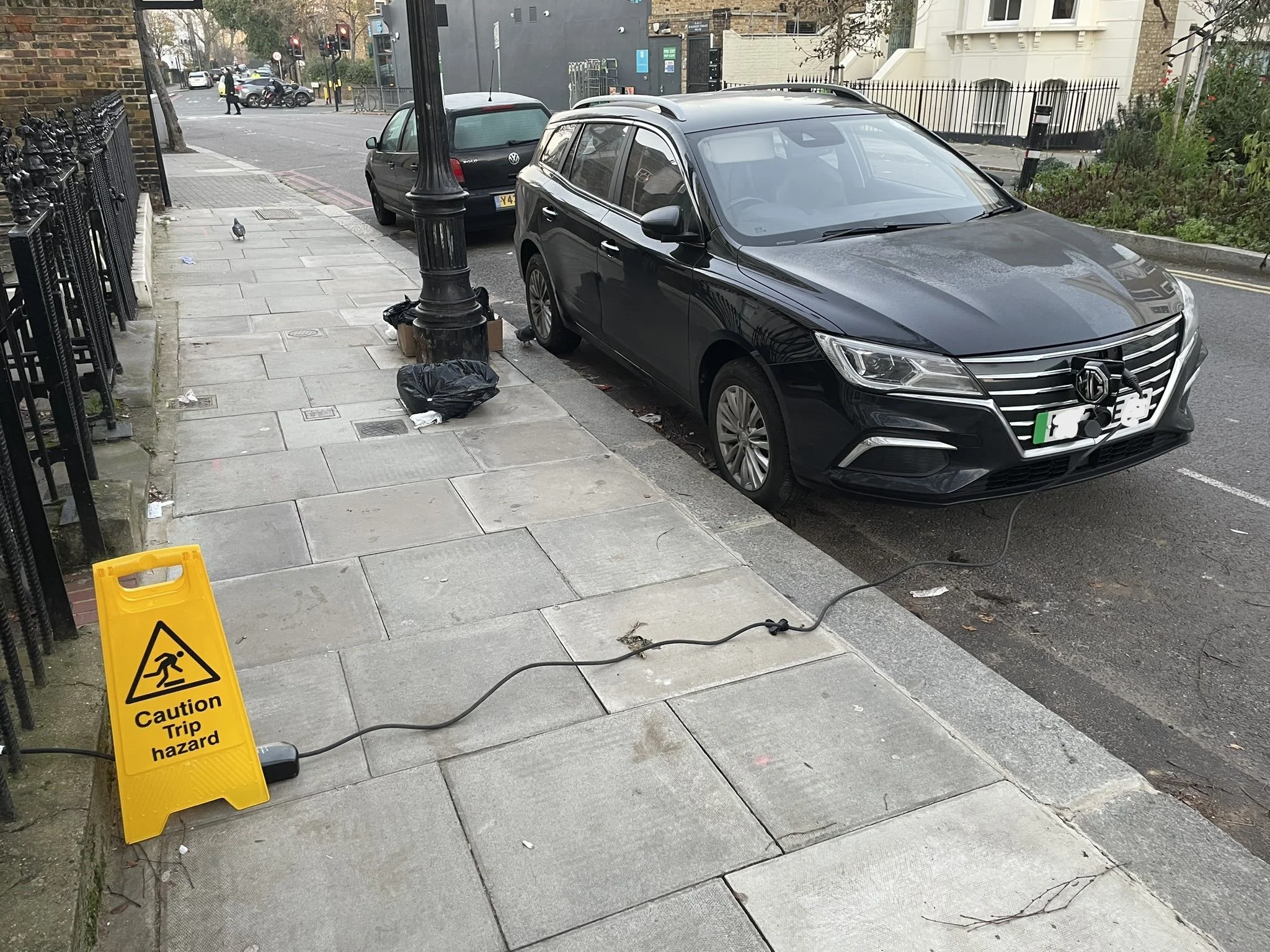
Don’t try this at home
Is It legal to run a charging cable across the pavement?
Section 137 of The Highways Act 1980 states that it is an offence ‘if a person, without lawful authority or excuse, in any way wilfully obstructs the free passage along a highway’. This includes footpaths and pavements.
Cables are more explicitly mentioned in section 178, which states that 'no person shall fix or place any overhead beam, rail, pipe, cable, wire or other similar apparatus over, along or across a highway without the consent of the highway authority.' This means that while a cable might be seen as an obstruction, the local authority has the final say.
Many local authorities forbid trailing cables over the pavement, even with a cable cover — such as those used on building sites. Other local authorities might allow it but the advice is always that the cable must be removed when the vehicle isn't actively charging. Best to check with your local council before running your EV charging cable across the pavement.
Is running a charging cable a trip hazard?
An EV cable across the pavement presents a trip hazard, even when covered. In cases where the council allows covered cables, the risk still falls on the owner. This means that if someone trips, you are liable.
As house insurance doesn't extend past your property boundary to the pavement, you're unlikely to be covered. This means that you may be at risk of the full cost of a personal injury claim, as well as prosecution under The Highways Act.
Why so many EV owners are asking this question
Approximately 1 in 3 UK homes don't have off-street parking, meaning not everyone can easily benefit from the lower cost of charging at home compared to using public chargers. For many, this cost-saving is one of the biggest pros of driving an EV. This means that those without access to off-street charging are being put off getting their own electric car.
However, many potential EV drivers can park on the street outside their house; of course, they're asking if they can run a car charging cable across the pavement. This would allow more people to benefit from the cost and convenience of charging at home.
What are your options if you can't charge at home normally?
You have a few public charging options if you can't charge at home or are unable to safely run an EV charging cable across the pavement. Here are your options for public charging when you can't charge at home:
● Public network: You can find chargers in car parks, at tourist attractions, at the supermarket, and at many service stations. The downside is that these tend to be more expensive than other options.
● Workplace charging: Many workplaces offer free or low-cost charging. For most, this means you can park up in the morning, then leave work with enough charge to get you through the rest of the week.
● Residential charging: These chargers are either standalone units on the pavement in residential areas or integrated into lamp posts. If you don't have them in your area, you may be able to request them from your council.
While there are more public options than ever, charging at home is still the better option for most people. If your local authority doesn't allow you to run a charging cable across the pavement, or you don't want to risk legal issues, a cross-pavement EV charging channel could be the solution.
How cross-pavement charging lets you charge safely and legally
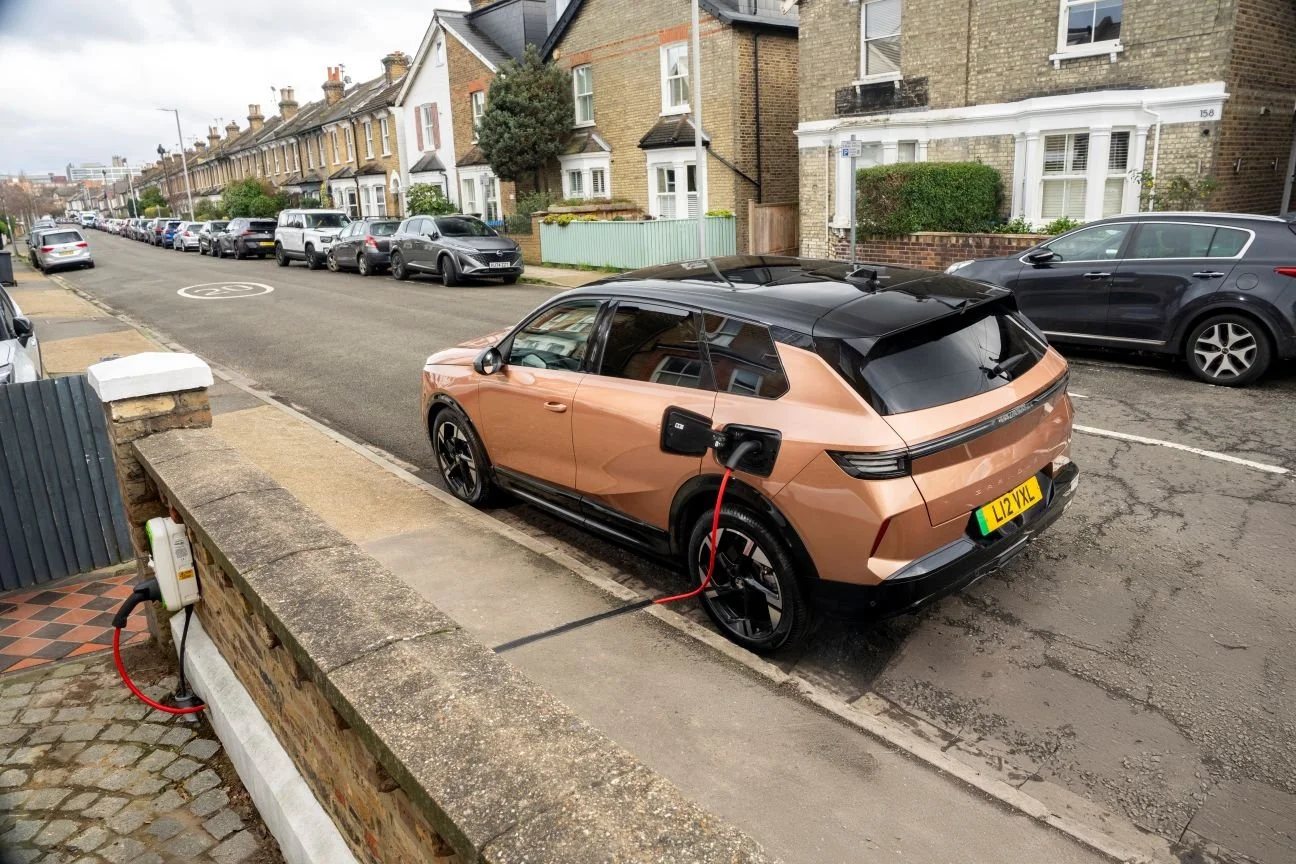
That’s better - safe charging across the pavement
A charging gully blends in with the pavement and allows you to charge across the pavement without causing a trip hazard. While a trailing cable — even a covered one — may obstruct prams, wheelchairs, and mobility scooters, a charging gully maintains the flat surface. This reduces the chance of someone tripping and allows everyone to get past, potentially without ever noticing there's a cable beneath them.
Eligibility for cross-pavement charging:
● You still need permission from your local authority, as pavements are public property
● Currently, this solution is only available in certain areas of the UK
● Take a look at our locations page or enter your postcode to find out if you're eligible
Kerbo Charge is now live with 45 local authorities across the UK, with further trials confirmed. If your area is covered, it's as simple as getting in touch with us to arrange your installation.
